
Is AI Taking Your Job?
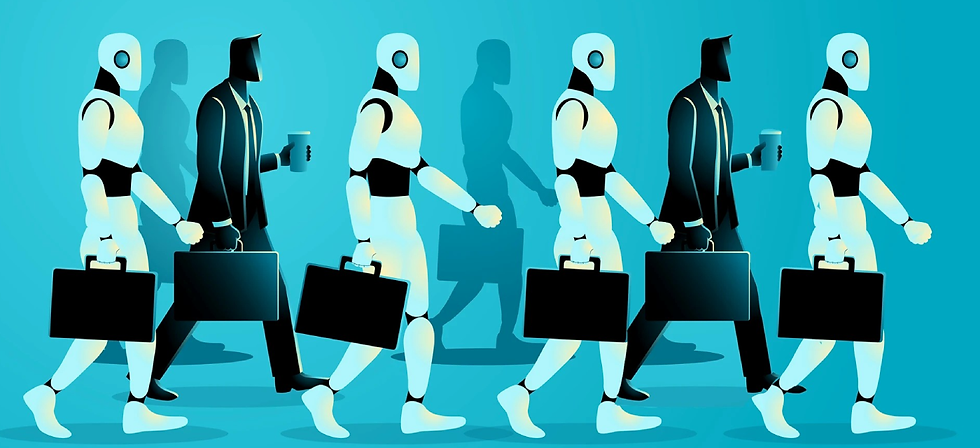
The World Economic Forum's 2025 Future of Jobs Report, which surveyed more than 1,000 employers across 55 economies, projects that 92 million jobs will be displaced by 2030 while 170 million new ones will be created, a net gain of 78 million. The numbers reflect broad optimism at the macro level. The harder question is whether the jobs being created will land anywhere near the people, skills and geographies where the losses are happening.
AI-Driven Layoffs
In 2025, nearly 246,000 tech jobs were cut globally, with AI directly cited in 55,000 of those US layoffs according to outplacement firm Challenger, Gray & Christmas. As of late April 2026, over 92,000 tech workers have already been let go, according to Layoffs.fyi.

Oracle executed what analysts believe is the deepest single cut at any enterprise software company since IBM's 60,000-person reduction in 1993. Between 20,000 and 30,000 positions, roughly 18% of its global workforce, were eliminated beginning March 31, 2026. Employees in the US, India, Canada and Mexico received termination emails with no prior warning, and access to company systems was cut immediately. The company has stated its goal is to redirect $8 to $10 billion in annual cash flow into AI data centers. Workers who spoke to TIME described being asked to train AI systems on their responsibilities before receiving termination notices.
"This is a job that I was so dedicated to for 19 years and gave everything to and none of it matters," Cynthia Sloan, former Senior Director of Technical Writing at Oracle.
Amazon cut approximately 16,000 corporate roles in January 2026, following a prior reduction of 14,000 in October 2025, while simultaneously reporting AWS revenue growth of 28% in Q1 2026, its fastest in 15 quarters.
CEO Andy Jassy had signaled the direction in 2025: "As we roll out more Generative AI and agents, it should change the way our work is done. We will need fewer people doing some of the jobs that are being done today."

Meta announced capital expenditure guidance of up to $135 billion for AI infrastructure in 2026, nearly double the $72 billion it spent in 2025, while cutting 8,000 employees, approximately 10% of its workforce. CEO Mark Zuckerberg told employees that 2026 would be the year "AI starts to dramatically change the way that we work," adding that Meta is investing in AI-native tooling so employees can "do more individually." The internal memo framing the layoffs described the cuts as necessary to "run the company more efficiently and to offset other investments."
Impact Across Industries
The disruption has spread across sectors including tech, finance, media and logistics, and into roles that were not previously considered vulnerable. Customer support was among the first to see abrupt, large-scale change following the rise of automation.
In 2024, Klarna replaced 700 customer service workers with an AI agent, reporting that it was handling 75% of all customer chats. The efficiency gains were measurable. However, customer satisfaction scores subsequently declined.
"We focused too much on efficiency and cost," CEO Sebastian Siemiatkowski said. "The result was lower quality, and that's not sustainable."
By 2025, Klarna had begun quietly rehiring for the roles it had eliminated. The AI performed well on routine queries.

Complex and emotionally charged conversations continued to require human agents. Research cited by industry analysts suggests 55% of companies that moved quickly to replace workers with AI now report regretting the decision, with costs related to customer churn and reputational damage offsetting projected savings.
Software development has seen a more structural shift. Tools such as Cursor, Claude Code, and OpenAI's Codex can read entire codebases, rewrite across files and submit completed pull requests. An analysis found that job postings requiring experience with AI coding tools grew 340% in a single year, while postings for pure implementation roles fell 17%.
Design and visual production have followed a similar arc. Tools like Adobe Firefly, Midjourney, and Canva's AI suite have compressed what was once a multi-day creative brief into a single session. Roles centered on producing initial concepts, mockups, and marketing assets are seeing their scope narrow as AI handles the generative layer. Industry analysis from 2025 found that AI tools can cut typical design project times by roughly one-third, with the sharpest displacement landing on junior designers and art directors at smaller agencies whose primary output was volume-based asset production.

Video production has seen some of the most rapid change. As of April 2026, Google's Veo 3.1 generates video from a text prompt and is available free to all Google account holders, with ten generations per month on the free tier. Work that previously required a production crew can now be initiated with a written description.
The Uncomfortable Truth
The jobs being cut and the jobs being created are not the same jobs, and they are not going to the same people. Workers whose roles center on repeatable, well-defined tasks are the ones feeling this most acutely. Workers who bring judgment, specialization, and flexibility are largely finding that AI makes them faster rather than redundant. The WEF's projected net gain of 78 million jobs depends on retraining programs and policy investment that are, at present, nowhere near the scale the disruption demands. What the data consistently shows is that the transition is neither uniformly catastrophic nor manageable across the board. It depends almost entirely on which rung of the ladder you are standing on when it moves.


Comments